CAT IV Does Not Mean Protection Against Every Electrical Fault
The CAT IV rating is designed to evaluate a measuring instrument’s ability to withstand transient overvoltage at power entry points or outdoor electrical systems. However, this standard only applies under limited testing conditions.
In modern industrial systems, especially those using variable frequency drives (VFDs), capacitor banks, or large inductive loads, voltage spikes often occur within extremely short periods of time. This is one of the most common reasons why a clamp meter’s insulation can fail even when the measured voltage remains within the permitted range.
Why Do Voltage Transients Easily Cause Arc Flash?
Unlike stable AC voltage, transient voltage surges rise extremely quickly and can reach several kilovolts within just a few microseconds. At that moment, the air between conductive gaps becomes ionized, forming an internal arc flash inside the measuring device.
This process happens faster than the response time of fuses or protection circuits. As a result, even a CAT IV clamp meter can still burn out before the current exceeds its rated limit.
Measurement Distance Directly Impacts Safety
In many electrical accidents, the issue is not the CAT rating itself but the measurement position. When the clamp jaw gets too close to busbars or areas exposed to high transient voltage, strong electromagnetic fields can trigger surface discharge and arc formation.
This becomes especially dangerous in environments with dust, moisture, or test probes that have deteriorated after long-term use.
Not All CAT IV Clamp Meters Are the Same
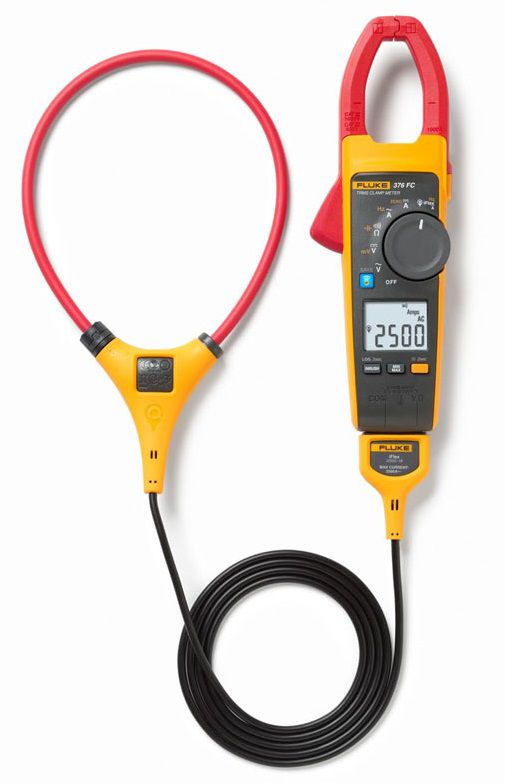
Even when two clamp meters carry the same CAT IV rating, their actual design quality can vary significantly. Industrial-grade models such as Fluke 376 FC and Hioki CM4373-50 typically feature:
Larger insulation clearance distances
Better arc-resistant materials
Multi-stage overvoltage protection circuits
Higher resistance to repetitive surge events
Meanwhile, some general-purpose models such as Kyoritsu 2055 are mainly intended for standard building electrical work and routine maintenance. Their protective capability may degrade more quickly when used continuously in environments with heavy electrical noise and frequent transient surges.
A proper understanding of transient overvoltage, maintaining a safe working distance, and selecting equipment that matches the actual operating environment are the key factors in ensuring electrical safety during field measurements.